



Muscle Physiology Applications
Aurora Scientific’s muscle physiology products are used in a variety of research protocols and assays to study skeletal, cardiac and smooth muscle from cell to whole tissue. Whether in vivo, in vitro or in situ, physiologists can precisely measure various indices of function including force, length, and ratiometric calcium. They can also calculate important functional data such as twitch, tetanus, fatigue, force-frequency, force-velocity, stiffness and work loops, to name a few.
Popular basic science and preclinical applications of muscle physiology and function research are listed below.
Exercise & Metabolism
From studying how different athletes perform or recover to quantifying an animal model’s resistance to metabolic fatigue, the field of exercise and metabolic physiology encompasses a broad range of study. Aurora Scientific has solutions to address these different areas of inquiry whether in murine or other animal models, or even with human samples. Powerful software combined with precise instruments for studying whole animal, whole muscle and single fiber samples make Aurora Scientific the leader in providing Exercise Physiologists with the means to understand muscle performance at the highest level.
Common Applications:
- human performance
- fatigue
- injury rehabilitation
- training & exercise
Popular Systems:
- 1200A: Isolated Muscle System for Rodents
- 1200B: Integrated Isolated Muscle System for Rodents
- 1205A: Isolated Muscle System for Rats
- 1300A: 3-in-1 Whole Animal System for Mice
- 1300B: Integrated 3-in-1 Whole Animal System for Mice
- 1305A: 3-in-1 Whole Animal System for Rats
- 1305B: Integrated 3-in-1 Whole Animal System for Rats
- 1310A: 3-in-1 Whole Animal System for Large Rodents & Small Animals
- 1415A: Permeabilized Fiber ATPase System – Microscope Mountable
- 1500A: Isolated Muscle System – Microscope Mountable
- 1515A: Intact Myocardial Slice System – Microscope Mountable
Recent Publications:
- Koopmans et al. “Stuart has got the PoWeR! Skeletal muscle adaptations to a novel heavy progressive weighted wheel running exercise model in C57BL/6 mice” Experimental Physiology (2024) DOI: 10.1113/EP091494
- Laskin et al. “Short-term aerobic exercise prevents development of glucocorticoid myopathic features in aged skeletal muscle in a sex-dependent manner” The Journal of Physiology (2024) DOI: 10.1113/JP286334
- Quattrocelli et al. “Intermittent prednisone treatment in mice promotes exercise tolerance in obesity through adiponectin” Journal of Experimental Medicine (2022) DOI: 10.1084/jem.20211906
Cardiology
For nearly 20 years Aurora Scientific has been at the forefront of cardiac tissue mechanics research. Aurora Scientific equipment is used by many of the world’s top researchers studying isolated heart tissue, fibers and even cells. We understand that heart muscle is different from other types of muscle and that its study presents unique challenges. Whether measuring force in cardiac myocytes or quantifying the mechanical properties of iPSC-derived cardiac scaffolds, Aurora Scientific has the expertise and the instruments to support the most demanding of cardiac mechanics experiments.
Common Applications:
- myosin thick & thin filaments
- myofibrillar protein function
- cardiac scaffolds & constructs
- induced pluripotent stem cell (iPSC)-derived cardiac myocytes
- cross-bridge cycling kinetics
- artificial cardiac constructs
- cardiac tissue engineering
Popular Systems:
- 1400A: Permeabilized Fiber System – Microscope Mountable
- 1415A: Permeabilized Fiber ATPase System – Microscope Mountable
- 1500A: Isolated Muscle System – Microscope Mountable
- 1515A: Intact Myocardial Slice System – Microscope Mountable
- 1600A: Permeabilized Myocyte System – Microscope Mountable
- 1700A: Myofibril System – Microscope Mountable
Recent Publications:
- Herwig et al. “Diabetes mellitus aggravates myocardial inflammation and oxidative stress in aortic stenosis: a mechanistic link to HFpEF features” Cardiovascular Diabetology (2025) DOI: 10.1186/s12933-025-02748-y
- Delalat et al. “Dysregulated inflammation, oxidative stress, and protein quality control in diabetic HFpEF: unraveling mechanisms and therapeutic targets” Cardiovascular Diabetology (2025) DOI: 10.1186/s12933-025-02734-4
- Palzkill et al. “A 6-Minute Limb Function Assessment for Therapeutic Testing in Experimental Peripheral Artery Disease Models” JACC: Basic to Translational Science (2025) DOI: 10.1016/j.jacbts.2024.08.011
Muscle Pathology & Wasting
As the largest generation in history enters their senior years, research into muscle pathologies has come into greater focus. These can include rare conditions like muscular dystrophy or more commonly, muscle atrophy due to cancer or disuse after injury. To develop drugs and therapies that combat this broad group of myopathies, functional measurements of muscle are often required in animal models. Aurora Scientific has worked with researchers in this community to provide tools that allow the study of muscles like the diaphragm as well as non-invasive assays to perform longitudinal tests on an individual animal as a disease or therapy progresses. We are proud of our long history working with the leading researchers and academics in this field and proud of the role our muscle pathology research instruments have played.
Common Applications:
- Duchenne muscular dystrophy (DMD)
- cachexia & sarcopenia
- gerontology & aging
- muscle atrophy
- spinal muscular atrophy (SMA)
- myotonia
- glycogen storage disease type II (Pompe disease)
- myotubular myopathy
Popular Systems:
- 1200A: Isolated Muscle System for Rodents
- 1200B: Integrated Isolated Muscle System for Rodents
- 1205A: Isolated Muscle System for Rats
- 1300A: 3-in-1 Whole Animal System for Mice
- 1300B: Integrated 3-in-1 Whole Animal System for Mice
- 1301A: Isometric Whole Animal System for Mice
- 1305A: 3-in-1 Whole Animal System for Rats
- 1305B: Integrated 3-in-1 Whole Animal System for Rats
- 1310A: 3-in-1 Whole Animal System for Large Rodents & Small Animals
- 1500A: Isolated Muscle System – Microscope Mountable
- 1515A: Intact Myocardial Slice System – Microscope Mountable
Recent Publications:
- Gineste et al. “Tamoxifen treatment fails to improve muscle dysfunction in a model of recessive RYR1-linked centronuclear myopathy” The Company of Biologists (2025) DOI: 10.1242/dmm.052462
- Chung et al. “Intrinsic muscle stem cell dysfunction underlies functional deficits in models of type 1 diabetes” NPJ Regenerative Medicine (2026) DOI: 10.1038/s41536-025-00452-9
- Marcella et al. “Low-dose lithium supplementation promotes musculoskeletal and metabolic health in ovariectomized female mice” The Journal of Physiology (2026) DOI: 10.1113/JP289990
Molecular Biology & Pharmacology
The study of animal models is one of the foundational pillars of molecular biology research. Aurora Scientific understands that your animal model is unique, and that characterizing its molecular phenotype can be challenging. It is important that the mechanism of drug action be understood in order to comprehend complex tissue responses. We have the solutions to study gross whole body physiology or the function of specific muscles to make characterizing the response of your animal model to pharmaceuticals both precise and efficient.
Common Applications:
- knockout mouse function
- signaling and transduction pathways
- muscle regulatory proteins
- stretch-activated channels
Popular Systems:
- 1200A: Isolated Muscle System for Rodents
- 1200B: Integrated Isolated Muscle System for Rodents
- 1205A: Isolated Muscle System for Rats
- 1300A: 3-in-1 Whole Animal System for Mice
- 1300B: Integrated 3-in-1 Whole Animal System for Mice
- 1305A: 3-in-1 Whole Animal System for Rats
- 1305B: Integrated 3-in-1 Whole Animal System for Rats
- 1310A: 3-in-1 Whole Animal System for Large Rodents & Small Animals
- 1400A: Permeabilized Fiber System – Microscope Mountable
- 1415A: Permeabilized Fiber ATPase System – Microscope Mountable
- 1500A: Isolated Muscle System – Microscope Mountable
- 1515A: Intact Myocardial Slice System – Microscope Mountable
- 1600A: Permeabilized Myocyte System – Microscope Mountable
- 1700A: Myofibril System – Microscope Mountable
Recent Publications:
- Jayash et al. “Anti-RANKL Therapy Prevents Glucocorticoid-Induced Bone Loss and Promotes Muscle Function in a Mouse Model of Duchenne Muscular Dystrophy” Calcified Tissue International (2023) DOI: 10.1007/s00223-023-01116-w
- Russell et al. “Modulating fast skeletal muscle contraction protects skeletal muscle in animal models of Duchenne muscular dystrophy” The Journal of Clinical Investigation (2023) DOI: 10.1172/JCI153837
- Mani et al. “BAG3 Attenuates Ischemia-Induced Skeletal Muscle Necroptosis in Diabetic Experimental Peripheral Artery Disease” International Journal of Molecular Sciences (2022) DOI: 10.3390/ijms231810715
General Muscle Physiology
Aurora Scientific produces transducers specially designed for measuring force, velocity, sarcomere length and other contractile properties in muscle. Integration with specially designed apparatus and software simplifies complex characterization of muscle properties. No matter what building block of muscle tissue you use as your model, from the myofibril to whole muscle groups and connective tissue, Aurora Scientific has a solution for you.
Common Applications:
- muscle contractile properties
- muscle architecture
- muscle metabolism
- fiber typing
- mechanical properties of muscle
Popular Systems:
- 1200A: Isolated Muscle System for Rodents
- 1200B: Integrated Isolated Muscle System for Rodents
- 1205A: Isolated Muscle System for Rats
- 1300A: 3-in-1 Whole Animal System for Mice
- 1300B: Integrated 3-in-1 Whole Animal System for Mice
- 1301A: Isometric Whole Animal System for Mice
- 1305A: 3-in-1 Whole Animal System for Rats
- 1305B: Integrated 3-in-1 Whole Animal System for Rats
- 1310A: 3-in-1 Whole Animal System for Large Rodents & Small Animals
- 1400A: Permeabilized Fiber System – Microscope Mountable
- 1415A: Permeabilized Fiber ATPase System – Microscope Mountable
- 1500A: Isolated Muscle System – Microscope Mountable
- 1600A: Permeabilized Myocyte System – Microscope Mountable
- 1700A: Myofibril System – Microscope Mountable
Recent Publications:
- Nunan et al. “Targeting Myostatin as an Adjunct Treatment for the Preservation of Cardiometabolic and Skeletal Muscle Function in Type 1 Diabetes” International Journal of Molecular Sciences (2025) DOI: 10.3390/ijms26104830
- Hessel et al. “A primer on the methods of skeletal and cardiac muscle mechanics using permeabilized preparations” Journal of General Physiology (2026) DOI: 10.1085/jgp.202513773
- Wilson et al. “Top–Down Proteomics of Skinned Human Muscle Fibers Reveals Proteoform-Resolved Fiber-to-Fiber Variability” Journal of Mass Spectrometry (2026) DOI: 10.1002/jms.70040
Comparative Muscle Physiology
The study of how living things move and are shaped by their environment often requires specialized tools and assays. Aurora Scientific has proven instruments engineered to the highest standards of accuracy and precision to uncover the diverse functional characteristics of muscle in your unique animal models. Measure complex muscle contractile properties from leeches, zebrafish and even cheetahs with our diverse, high-performance muscle physiology equipment.
Common Applications:
- muscle energetics
- muscle morphology
- locomotion
- bio-inspiration
- invertebrate muscle
- amphibian muscle
- reptilian muscle
- mammalian muscle
Popular Systems:
- 1200A: Isolated Muscle System for Rodents
- 1200B: Integrated Isolated Muscle System for Rodents
- 1300A: 3-in-1 Whole Animal System for Mice
- 1310A: 3-in-1 Whole Animal System for Large Rodents & Small Animals
- 1400A: Permeabilized Fiber System – Microscope Mountable
- 1415A: Permeabilized Fiber ATPase System – Microscope Mountable
- 1500A: Isolated Muscle System – Microscope Mountable
Recent Publications:
- Liu et al “Modeling thick filament activation suggests a molecular basis for force depression” Biophysical Journal (2024) DOI: 10.1016/j.bpj.2024.01.024
- De Napoli et al. “Reduced ATP turnover during hibernation in relaxed skeletal muscle” Nature Communications (2025) DOI: 10.1038/s41467-024-55565-4
- Moran et al “Kinetic comparisons of jaw opening, jaw closing and locomotor muscles” Comparative Biochemistry and Physiology Part A: Molecular & Integrative Physiology (2025) DOI: 10.1016/j.cbpa.2024.111782
Explore Muscle Physiology Content
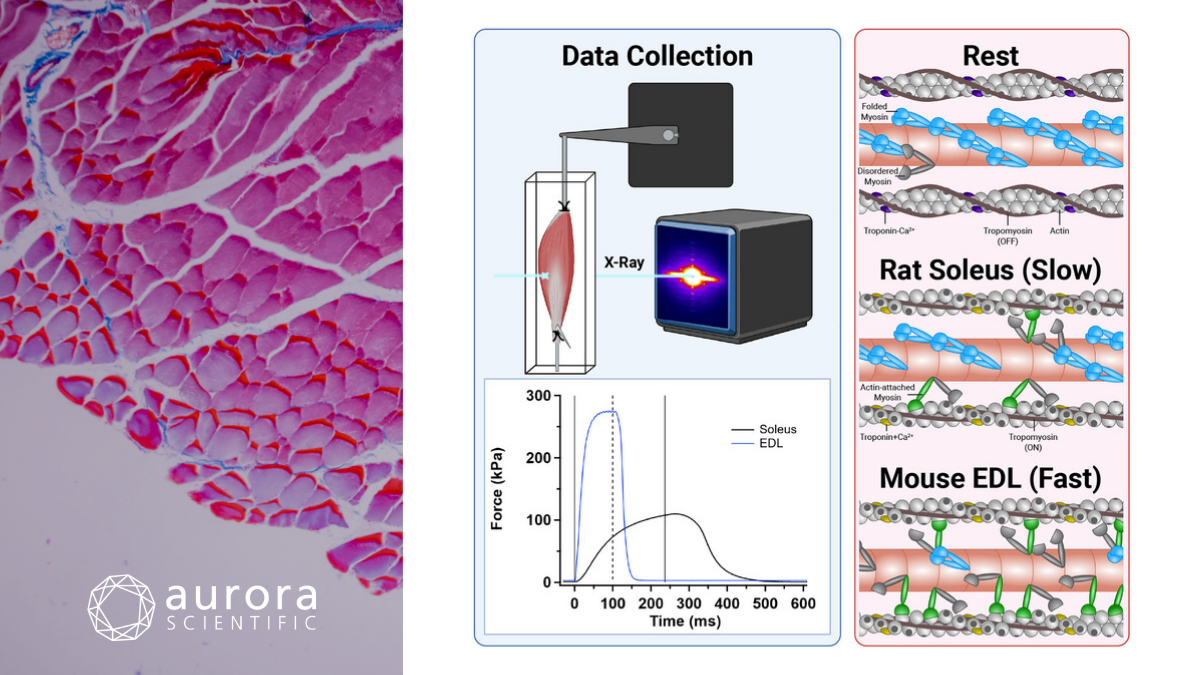
X-Ray Diffraction: Muscle Under the Beam
Following our attendance at the European Muscle Conference, we're spotlighting recent research using X-ray diffraction to explore muscle contraction, myofilament structure, and muscle ...
On Demand: Skeletal Muscle Circadian Clocks: Keeping Time for Systemic Health
Now available on demand! Dr. Karyn Esser presents the critical role of skeletal muscle circadian clocks in maintaining muscle strength, metabolic health, and systemic adaptations to endurance ...
On Demand – Beyond Muscle Mass: What Murine Muscle Function Reveals
In this 1-hour webinar, we explore how direct measurements of skeletal muscle function can reveal the effects of disease, aging, exercise, and experimental interventions beyond what muscle mass, ...
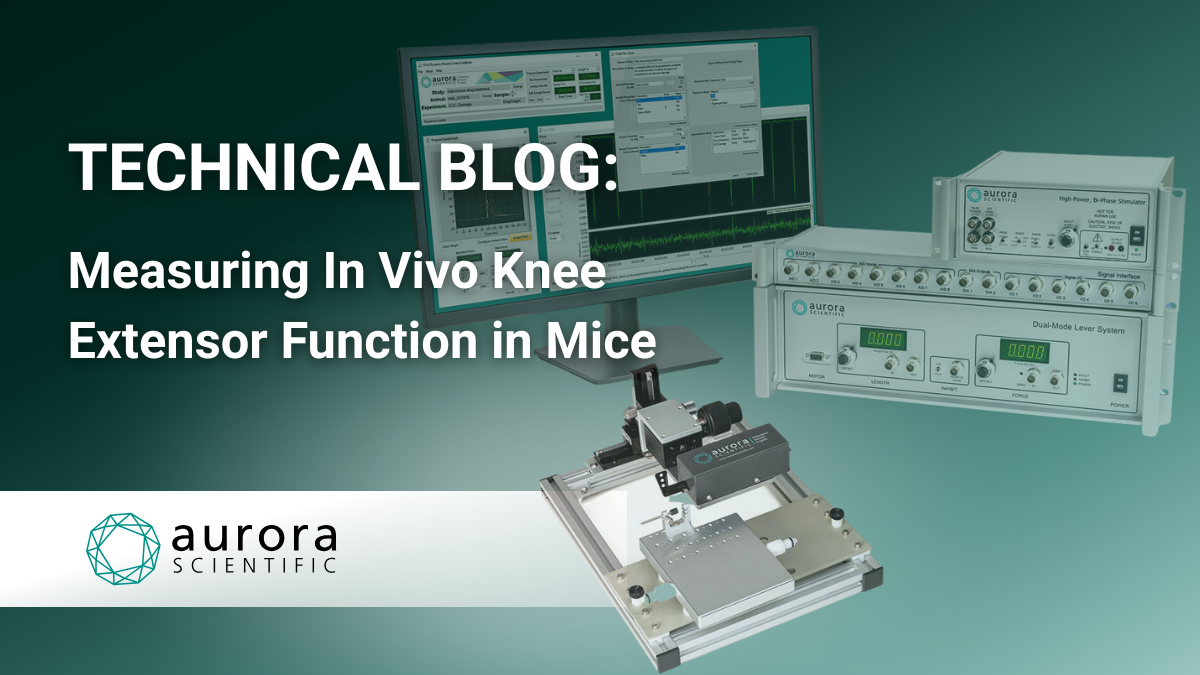
A Guide to Measuring In Vivo Knee Extensor Function in Mice
This blog provides a guide on performing in-vivo measurements of mouse knee extensor function using our 1300A 3-in-1 Whole Animal System for ...