



655A: CardioLoop Data Acquisition and Analysis Software
The 655A CardioLoop is a powerful new software system specifically designed to perform detailed mechanics experiments on isolated cardiac muscle, including myocardial slices and strips. These experimental protocols are all structured on the basis of continuous pacing, rather than being temporally based, with a fixed duration of stimulation and length changes occurring at a predetermined time.
This experimental structure naturally lends itself to twitch based contractions performed to assess basic contractility, however, it also provides a deeper level of functionality and permits a more physiological modelling of the cardiac cycle. This cardiac cycle paradigm relies on the Windkessel model of the heart with 4 elements, referred to as a the 4-element Windkessel model. Given that heart volume is equal to optimal length (Lo) of the sample in this model, CardioLoop can contract the muscle sample and take the force profile in real-time as an input into the Windkessel to predict the heart’s volume response. This volume response, in turn, applies a change of length command to our high-speed length controller (322D) on time with the next twitch iteration. The result of which is a modified contraction profile and thus a new predicted volume response. The CardioLoop software continually iterates this process until the length profile and force profile converge. The result of this convergence is a responsive cardiac cycle dependent on the exterior conditions of the 4-element Windkessel model’s variables.
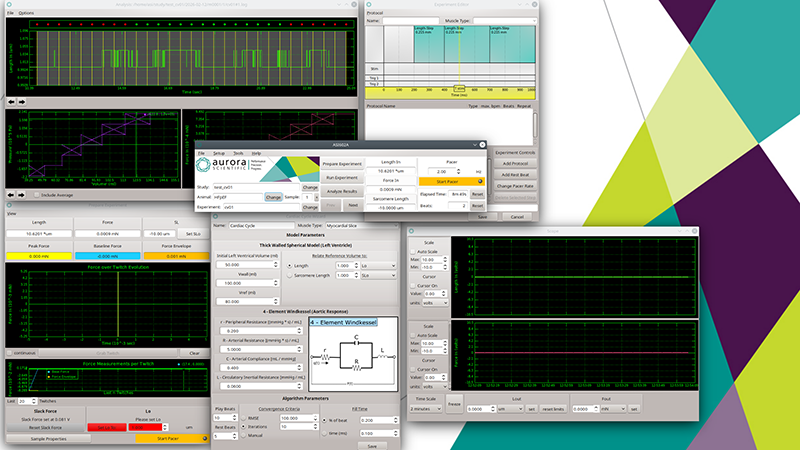
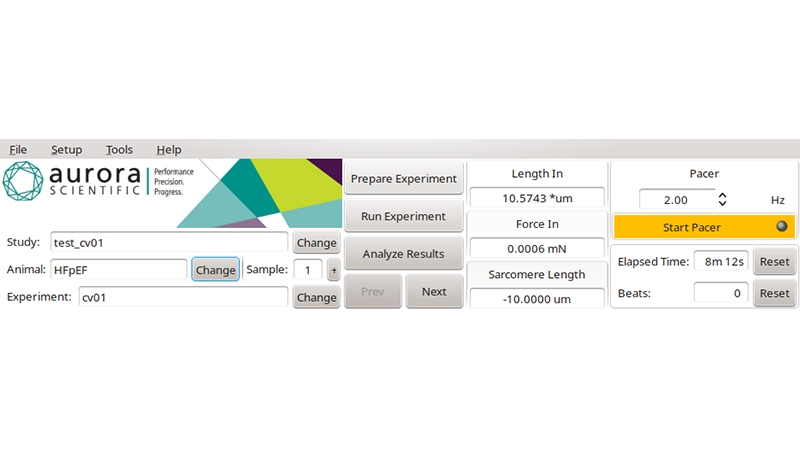
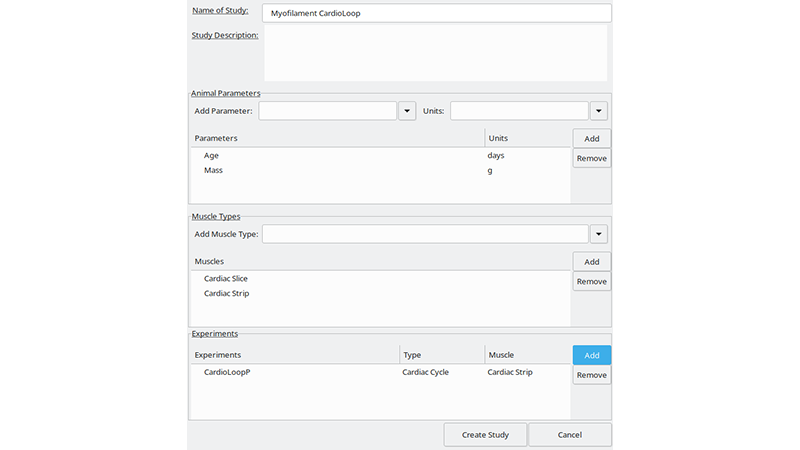
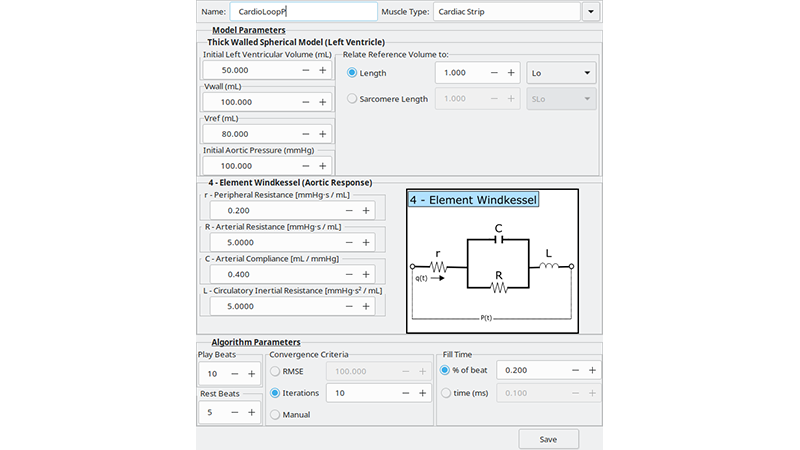
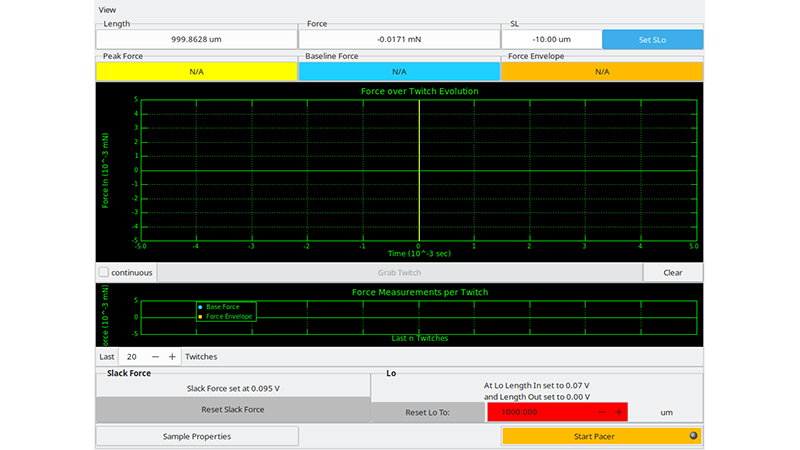
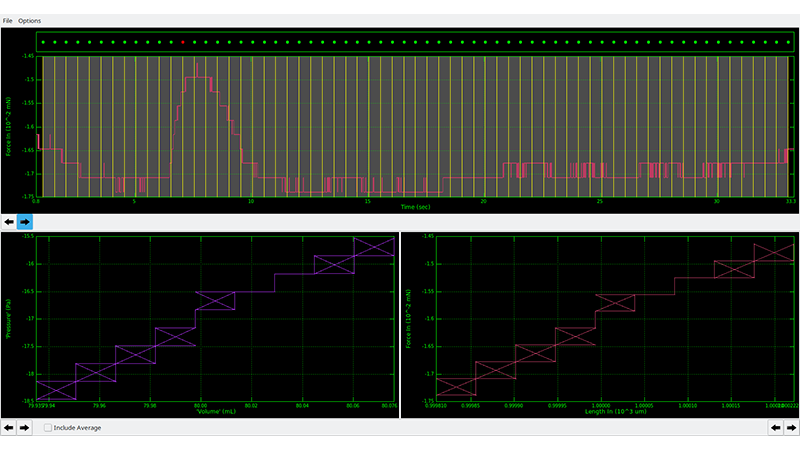
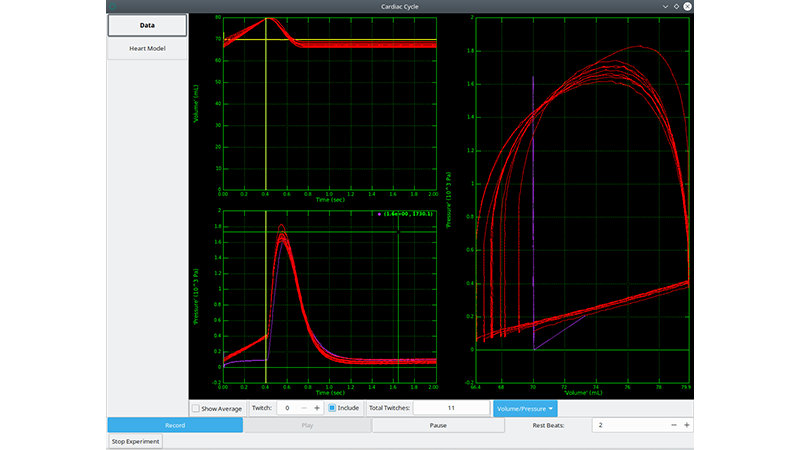
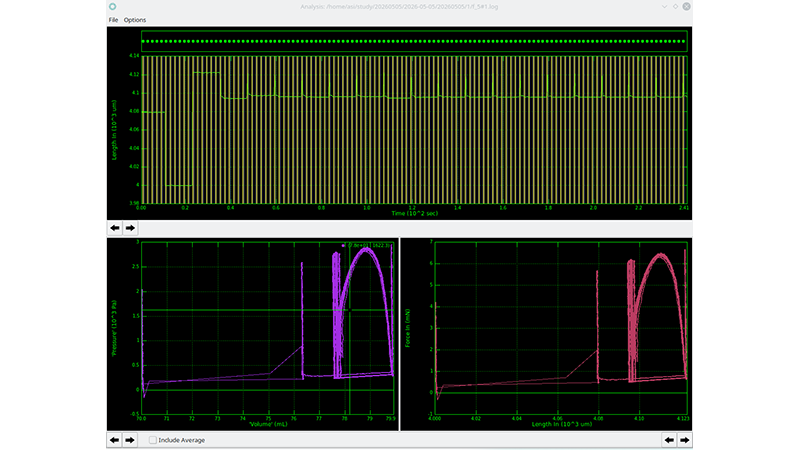
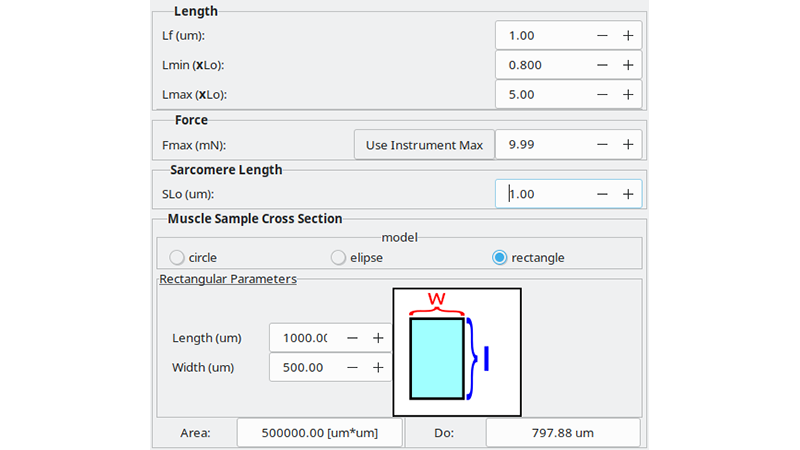
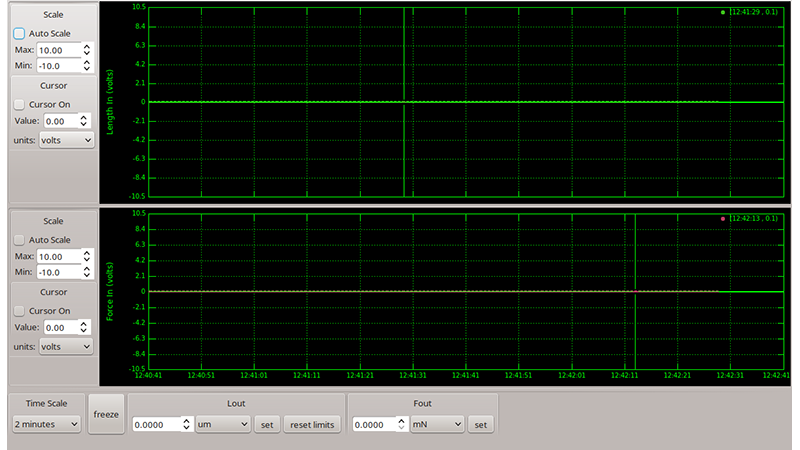
Contractile data collected by the CardioLoop software can naturally be analyzed with a flexible analysis and graphing module that enables a sophisticated averaging and grouping of contractions which can subsequently be plotted and analyzed against each other on multiple axes and exported for further manipulation.
CardioLoop, like its sister program, 600A, will seamlessly integrate with other Aurora Scientific software products in our Real-Time Linux suite, such as Fluorotrack (955A) and HVSL (901D).
Select References
- Bagni, M. Angela et al “The effects of fatigue and oxidation on contractile function of intact muscle fibers and myofibrils isolated from the mouse diaphragm.” Scientific Reports (2019) DOI: 10.1038/s41598-019-39353-5
- Kazmierczak K. et al. “Slow-twitch skeletal muscle defects accompany cardiac dysfunction in transgenic mice with a mutation in the myosin regulatory light chain.” The FASEB Journal (2019) DOI: 10.1096/fj.201801402R
- Robbins N. et al. “Probenecid Improves Cardiac Function in Patients With Heart Failure With Reduced Ejection Fraction In Vivo and Cardiomyocyte Calcium Sensitivity In Vitro.” Journal of the American Heart Association (2018) DOI: 10.1161/JAHA.117.007148
- Ijpma, Gijs et al. “Human trachealis and main bronchi smooth muscle are normoresponsive in asthma.” American Journal of Respiratory and Critical Care Medicine (2015) DOI: 10.1164/rccm.201407-1296OC
- Brynnel et al. “Downsizing the molecular spring of the giant protein titin reveals that skeletal muscle titin determines passive stiffness and drives longitudinal hypertrophy” eLife (2018) DOI: 10.7554/eLife.40532
- McNamara, James W. et al. “Cardiac myosin binding protein-C phosphorylation regulates the super-relaxed state of myosin.” Proceedings of the National Academy of Sciences (2019) DOI: 10.1073/pnas.1821660116
- Bagni, M. Angela et al “The effects of fatigue and oxidation on contractile function of intact muscle fibers and myofibrils isolated from the mouse diaphragm.” Scientific Reports (2019) DOI: 10.1038/s41598-019-39353-5
- Kazmierczak K. et al. “Slow-twitch skeletal muscle defects accompany cardiac dysfunction in transgenic mice with a mutation in the myosin regulatory light chain.” The FASEB Journal (2019) DOI: 10.1096/fj.201801402R
- Robbins N. et al. “Probenecid Improves Cardiac Function in Patients With Heart Failure With Reduced Ejection Fraction In Vivo and Cardiomyocyte Calcium Sensitivity In Vitro.” Journal of the American Heart Association (2018) DOI: 10.1161/JAHA.117.007148
- Weidner at al. “Impact of lengthening velocity on the generation of eccentric force by slow-twitch muscle fibers in long stretches” Pflügers Archiv - European Journal of Physiology (2024) DOI: 10.1007/s00424-024-02991-4
Related Products
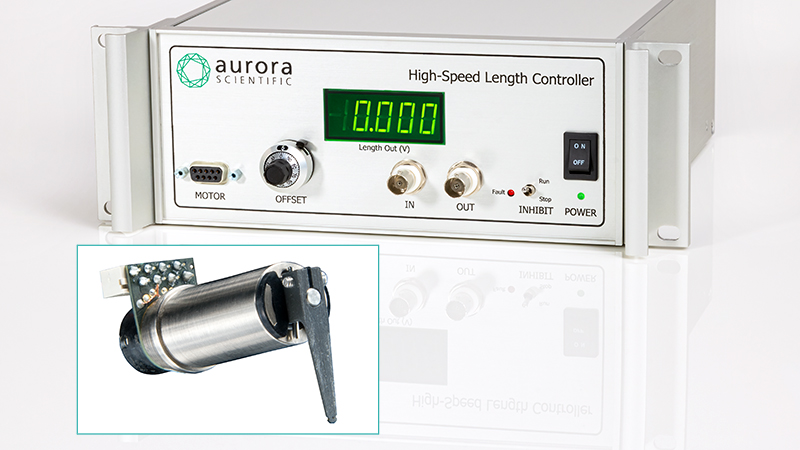
315D/322D: High-Speed Length Controllers
The 315D/322D High-Speed Length Controllers give physiologists the ability to control and measure length of single cells, fibers and whole muscle with ease.
Learn More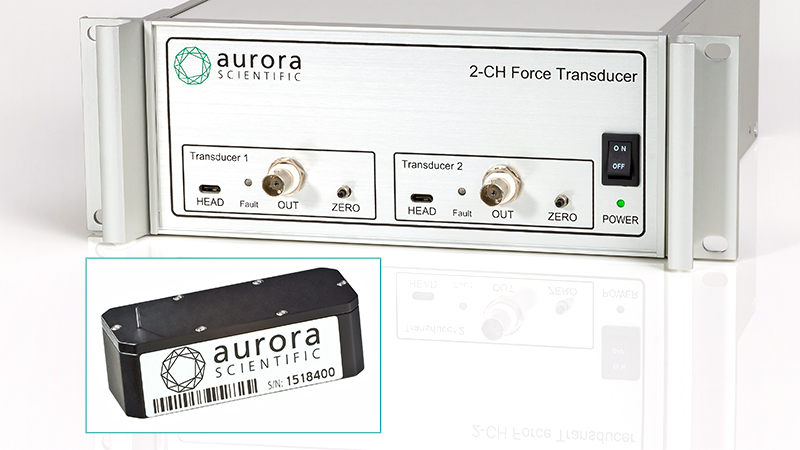
400C: Force Transducers
The 400C series of force transducers is the next generation of our widely used 400A and 400B series. The 400C series enables contractile measurements from a variety of muscle types and sizes and are designed to meet the needs of muscle researchers.
Learn More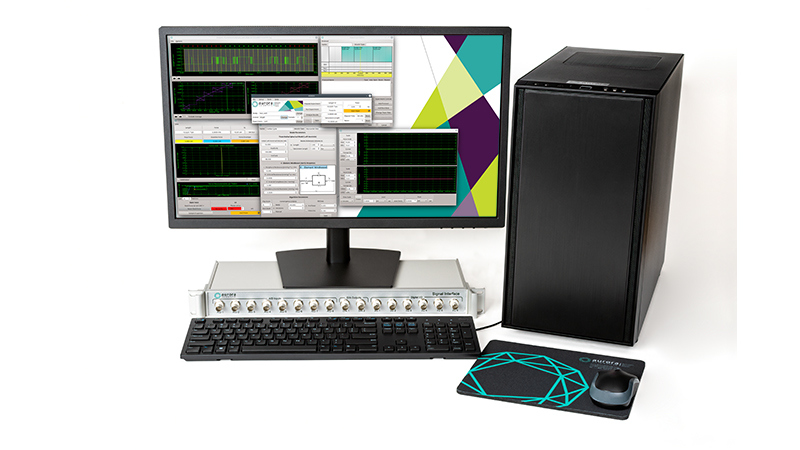
602A: CardioLoop Data Acquisition and Analysis System
The 602A CardioLoop Data Acquisition and Analysis System serves to integrate components and provide the researcher with a twitch based software employing a cardiac cycle module based on the windkessel model of the heart.
Learn More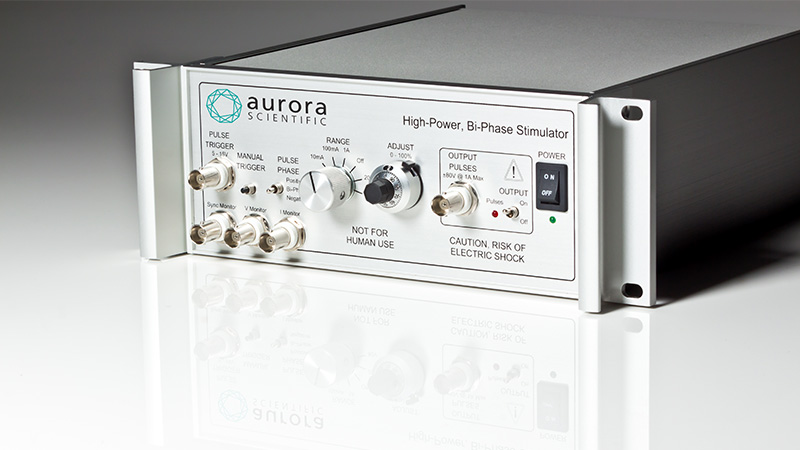
701C: Electrical Stimulator
Our high-powered, bi-phase stimulator designed for muscle researchers conducting the most demanding field stimulation protocols.
Learn More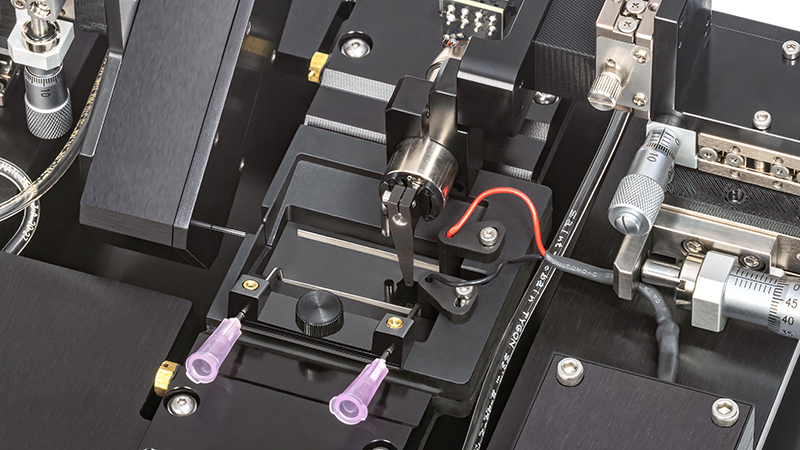
801C: Small Intact Muscle Apparatus – Microscope Mountable
Highly integrated apparatus, optimally designed to test small, intact muscle contractility
Learn More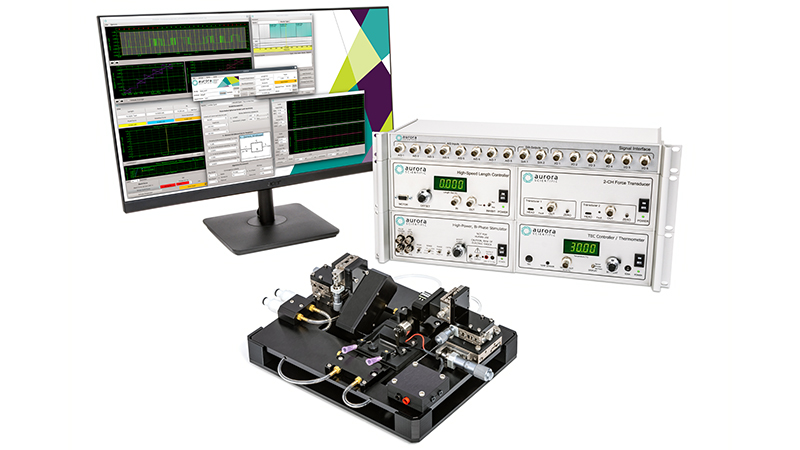
1515A: Intact Myocardial Slice System – Microscope Mountable
The 1515A Intact Myocardial Slice System is a highly integrated, turnkey system providing cardiovascular and physiology researchers a simple and accurate way to create, control and measure living myocardial slice (LMS) samples.
Learn More
901D: High-Speed Video Sarcomere Length
A simple, turn-key system for measuring sarcomere spacing in isolated muscle preparations.
Learn More
950A: Calcium Fluorescence System
The 950A calcium fluorescence system enables physiology researchers to easily measure intracellular calcium along with tissue length, force and sarcomere length.
Learn MoreSpecifications
| Software Specifications | 655A |
|---|---|
| Operating System | Linux – Debian 11, PRREMPT RT, real-time, 64-bit |
| Companion Software | 650A, 802D, 820A, 901D, 955A |
| Data Channels Recorded | Length, Force, Sarcomere Length, Stimulation Timing, Auxiliary 1, Auxiliary 21 |
| Aurora Scientific Instruments Controlled | 300 series length controllers, 400 series force transducers, 700 series stimulators, 800 series apparatus, 901D HVSL sarcomere length |
| Main Window | Elapsed Time, Time since Last Stimulus, Length and Force Readouts. Display: graph of test results as they are collected. Buttons for: Start Sequence, Start Test, Next Test, Stop Test and Zero Lout. Dropdown menus: File, Edit, Calibrate, Setup, Protocol, Analysis, Scope, Burst and Help. |
| Protocol Functions | Length: Step, Ramp, Square, Sine, Sweep, Sample, Hold Force: Step, Ramp, Square, Sine, Sweep, Sample, Hold, Clamp Sarcomere Length: Step, Ramp, Sample, Hold, Trigger, Track Stimulation: Stimulus, Trigger 1, Trigger 2 Control: Sync Stimulus, Data Enable, Data Disable, Data Burst, Trigger FLA, Bath, Repeat, Stop |
| Stimulation Control | Automatic stimulation control – frequency (Hz. or BPM), pulse width, pulse duration |
| Sequencer | Allows protocols to be run in a pre-determined manner with control of time between each protocol (skip beats) |
| Scope Data Display | Real-time data output of chosen channels. Displays up to 1 hour of data – zoom function, time base control, pause function |
| Analysis | Per-twitch analysis: force, length, velocity, dF/dt, SL, AUX1, AUX2; work-loop and pressure-volume loop |
| Export Analysis | Creates ASCII data files of the data presented on the Analysis window |
1 = Auxiliary Channels: can be configured to suit, common usages are: Experimental monitors: Temperature, pH, Fluorescence: Numerator, Denominator