



Advancing Sarcopenia Research: CUHK Lab Unveils Early NMJ Deficits in Aging with Aurora Scientific’s 1200A

We recently had the privilege to interview Louis Cheung, PhD and Can Cui, PhD from the CUHK Department of Orthopaedics and Traumatology where Dr. Cheung serves as Director of the Musculoskeletal Research Laboratory. Their lab uses the 1200A Isolated Muscle Test System System to study Sarcopena and NMJ function.

Louis Cheung, PhD
Professor & Director
Musculoskeletal Research Laboratory
Department of Orthopaedics and Traumatology
Prince of Wales Hospital
The Chinese University of Hong Kong

Can Cui, PhD
Postdoctoral Fellow
Musculoskeletal Research Laboratory
Department of Orthopaedics and Traumatology
Prince of Wales Hospital
The Chinese University of Hong Kong
Could you tell us about yourself, your academic background and journey to CUHK?
Professor Louis Cheung, Director of the Musculoskeletal Research Laboratory at CUHK, began his academic career by focusing on osteoporotic fracture healing. However, his work with aging patients revealed another significant, under-explored problem…
He noted, “After more than a decade of work in this area, I recognize that sarcopenia is another critical but under-explored geriatric issue among the hip fracture patients.”
This insight prompted a strategic shift, and his research now primarily targets sarcopenia – the age-related loss of muscle mass and strength affecting up to 40% of older adults. Utilizing advanced technology, his team is investigating the condition’s pathogenesis by zeroing in on the degeneration of the neuromuscular junction (NMJ), aiming to develop new interventions to preserve and regenerate NMJs and combat muscle aging.
Describe what your current research goals or objectives are in the area of neuromuscular junctions?
Professor Louis Cheung’s team’s major focus is a non-pharmacological approach: low-magnitude, high-frequency vibration therapy. In mouse models, this therapy significantly mitigates NMJ degeneration both morphologically and functionally by enhancing acetylcholine receptor clustering and regulating mitochondrial quality. The success of this approach is already being recognized:
“Our vibration therapy has been validated in a randomized control trial involving 710 older adults and was recently recognized by the US CDC…as an effective intervention for fall prevention in elderly.”
Beyond non-pharmacological approach, the lab is also making promising strides in pharmacological strategies, including drug repurposing and nanoparticle-based delivery systems. Preliminary results using the ex-vivo muscle testing machine show these agents effectively attenuate NMJ degeneration and improve muscle function, fueling optimism for near-future clinical translation.
What techniques or methods do you use in your experiments to achieve your research goals?
To effectively fight age-related muscle loss, Dr. Can Cui, a postdoctoral fellow in Professor Louis Cheung’s lab, explains how they employ a powerful array of techniques focused on the neuromuscular junction.
“One key tool is single-fiber electromyography, SFEMG, which helps us detect early signs of neuromuscular transmission issues such as increased jitter and impulse block, which are indicators of NMJ dysfunction.”
Crucially, they have also developed an optimized ex-vivo electrophysiological protocol using the Aurora Scientific 1200A System to quantitively assess both NMJ and skeletal muscle function, which analyzes everything from tetanic force measurements to fatigue. Furthermore, the team utilizes molecular biology techniques (immunostaining, qPCR, Western blotting) to evaluate relevant proteins and gene expressions. All these diagnostic tools are essential for testing potential interventions in aged mouse models to explore their potential in aged mouse models to explore their potential in reversing NMJ degeneration and muscle atrophy.
How has the Aurora 1200A system helped you elucidate NMJ function? What are the unique characteristics of this technique?
The Aurora 1200A system has proven to be a game-changer for Professor Cheung’s lab, revolutionizing how they study NMJ function. Its primary advantage is the dual stimulation capability, which is vital for accurately distinguishing between problems that originate within the muscle and those specific to the NMJ itself, achieved through both direct muscle and indirect nerve stimulation.
The specialized stimulating probe, co-designed by Dr. Cui, facilitates precise sciatic nerve stimulation. By establishing optimal and consistent parameters, along with nerve preservation techniques, the lab ensures reproducible results. The system then calculates crucial quantitative metrics, such as neural transmission failure and intratetanic fatigue. This level of detail allows the researchers to detect early NMJ deficits in aging models and evaluate the therapeutic efficacy of interventions with unprecedented high fidelity, effectively bridging the gap between structural observation and functional outcomes.
What are your future research directions?
Looking forward, Professor Louis Cheung’s team is focused on supporting the clinical translation of their promising interventions. A critical next step once preclinical results are mature is initiating clinical trails, which necessitates adapting their sophisticated assessment tools from animal models to human subjects.
“For future human trails, we are establishing a single fiber EMG, the electromyography protocol, in our laboratory to evaluate the NMJ functions in sarcopenia patients. This will be a critical step towards bridging our bench to bedside effort.”
In addition, the team is expanding its scope to osteosarcopenia, an emerging condition combining muscle loss with bone issues, which significantly elevates the risk of fractures. They hypothesize that NMJ function may be more severely impaired in these patients, paving the way for targeted treatments. Recognizing that conventional approaches (exercise and diet) may not be feasible for all elderly patients, the lab will continue to explore novel pharmacological strategies, always keeping their ultimate goal of improving the quality of life for aging populations at the forefront.
Explore Interviews, Webinars, & More!
Hear from Anthony, Khoi, and Aurora Scientific to learn more about AMB, this new found partnership and their goals for the future below!
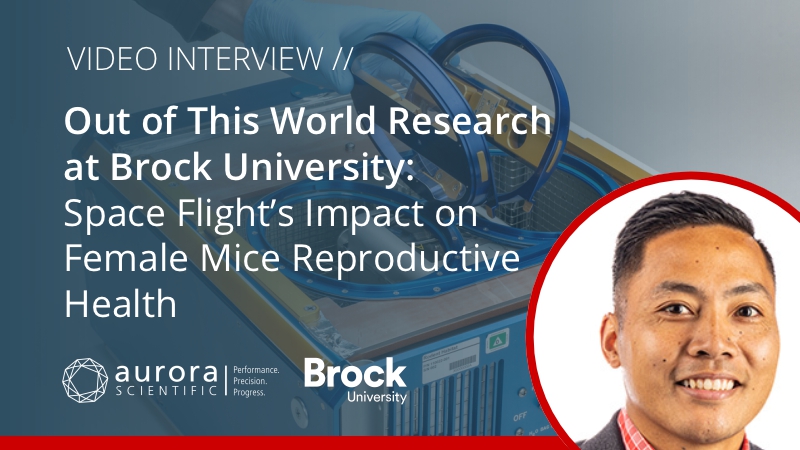
NASA’s SpaceX CRS-29 launched on November 9th carrying the Rodent Research-20 (RR-20) payload, the contents of which will be studied by Brock University’s Dr. Val Fajardo and his team using Aurora Scientific equipment upon its return.
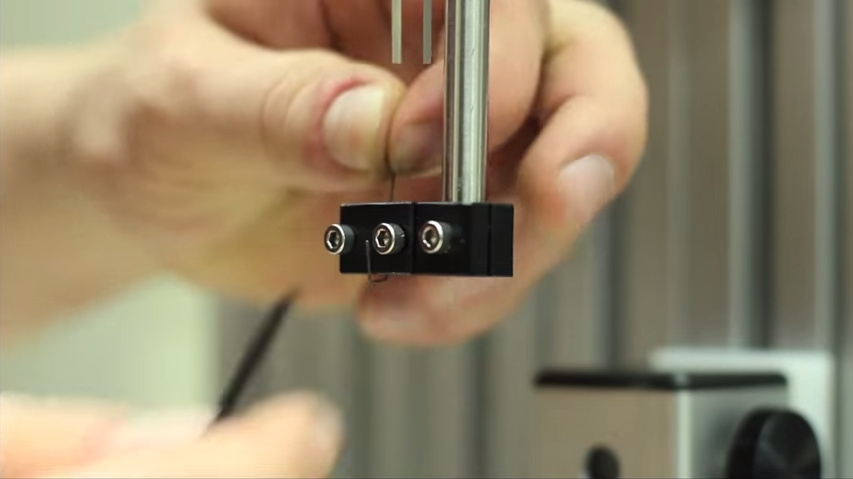
System setup guide for the 1200A in-vitro muscle test system.